
” The Sense of an Ending”
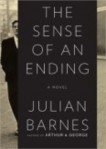
Winner of the 2011 Man Booker Prize (an annual award for the best original full length novel written in English by a citizen of the Commonwealth), “The Sense of an Ending” by Julian Barnes, is a story told from the perspective of Anthony (Tony) Webster, a British pensioner who finds cause to reexamine the past after an old friend comes back into his life.
Tony has three close friends in high school: Colin, Alex, and Adrian whom we primarily learn about through what happens in history class with their professor, Joe Hunt. Why history class? Because history is so closely tied to perspective and perspective is a key issue in this novel. In Old Joe Hunt’s class, the adolescent Tony claims “History is the lies of the victors” and Old Joe Hunt responds by saying “As long as you remember that it is also the self-delusions of the defeated.”
The young generally think in terms of winners and losers, and Tony Webster is no exception. Only when Tony is older does he realize that history is really the memory of survivors – “most of whom are neither victorious nor defeated“- but that memory is a “bit like the black box aeroplanes carry to record what happens in a crash. If nothing goes wrong, the tape erases itself. So if you do crash, it’s obvious why you did; if you don’t, then the log of your journey is much less clear.” Such is life, also. Tony doesn’t always remember things the way they really happened because there were so few crashes.
The beginning of the novel is reminiscent of “The Catcher in the Rye:” a teenagers perspective on the awful state of being an adolescent in an adult world, except that Tony is not as cynical or observant as Holden Caulfield. Instead, Tony takes life as it is dealt to him seemingly unaffected by outside pressures of being anything other than who he is: an average student who goes on to study history (ironically) at Bristol College, take a trainee job that leads to a long career in the same job. He is a man of self-described peacefulness in search of a peaceful life. There is little drama in Tony’s life and when drama occurs, he disarms it by either discarding or succumbing to it. ‘
Tony Webster is not an introspective man and he realizes this late in life. He relies on his gut feeling and goes forward with little or no examination. When Tony forms a relationship with a woman of high drama, he abruptly ends the relationship..not because of any deep thought for he appears not to have any deep thoughts, but because he just decided “no,” it wasn’t going to work. Ironically, his intuition is right but his perspective and memory of his actions are more dramatic and more hurtful than he remembers and this surprises him when he is forced to re-examine the past. Tony finally realizes that “history is that certainty produced at the point where the imperfections of memory meet the inadequacies of the documentation” The problem here is the documentation doesn’t lie and therefore bares open fully the inadequacies of memory forcing Tony to think deeper than he ever had to.
‘Who said it the longer we live, the less we understand?’ Read the book; the story makes you think, and think some more.


 Paddock Post
Comments are closed.