
Pets: IMHA and One Vaccine at a Time….
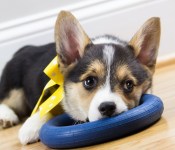
A few weeks ago, my daughter took her 6-year old female corgi to a new vet who gave the dog 3 vaccinations (rabies, leptospira, and bordetello). Five days later, the dog collapsed so my daughter took her to Burlington Emergency Veterinary Specialists (BEVS) where they admitted the dog.
Bloodwork indicated she was anemic: a PCV (Packed Cell Volume that is also called hematocrit) score of 23 compared to a normal 35, and an ultrasound showed an enlarged spleen which led to the diagnosis of Immune-Mediated Hemolytic Anemia (IMHA) where the body no longer recognizes healthy red blood cells as part of the body and develops antibodies to destroy them. Without enough healthy red blood cells, the organs are deprived of oxygen, or the animal is overwhelmed by a blood clot.
IMHA is a serious illness, with mortality rates as high as 70%, primarily in the first 4-14 days. If you google IMHA, you will learn that IMHA is a life threatening immune disease where the body attacks and destroys its own red blood cells. The cause can be primary (an estimated 75% of cases) where there is no obvious trigger or secondary where the immune system is triggered by vaccines, drugs, a bee sting, cancer, a snake bite, blood parasites, toxins, and a zillion other possibilities.
The cause of my daughter’s dog’s IMHA is unknown but I believe she was predisposed (a blood test on the day of the vaccines indicated she was slightly anemic but the results were communicated AFTER the vaccines were administered) with the 3 vaccines setting off an immune system firestorm. IMHA is more common in females with an average age of 6.8 years old. Up until the most recent vaccinations, the dog had one vaccine at a time, with a second administered 4 weeks later, and a third 4 weeks after the second vaccine.
Most dogs and cats will tolerate 3 vaccines at a time but about 5 per 1,000 will have an adverse reaction and it’s unknown how many dogs or cats will develop IMHA, but the risk is there. So, why take the chance? Ideally bloodwork should be done BEFORE vaccines are given to ensure there is no underlying anemia or other problems. If the bloodwork is normal, then 1 vaccine should be given. If a second vaccine is needed, consider waiting 4 weeks before giving the animal the second vaccine, and if a third vaccine is needed, wait another 4 weeks. It’s time consuming but worth the effort to avoid IMHA.
My daughter’s dog pulled through after nearly 2 weeks in BEVS, 9 of the days in intensive care with multiple transfusions, immune suppressant drugs, nausea medications, and blood thinners to prevent clots. She nearly died twice and if not for the care of the veterinarians and technicians, she wouldn’t have made it. She was one of the lucky ones. Nearly a month out, and she is still recovering with her PCV at 33 (at her lowest she was at 10). She will be on immunosuppressants for the rest of her life and will never be able to have a vaccine again, but she is alive and we are grateful.
The risk of developing IMHA after multiple vaccines is low but not zero. Use caution and consider taking bloodwork before vaccines are administered, and when administered consider one vaccine at a time.


 Paddock Post
Comments are closed.