
The Bee Gees: How Can You Mend a Broken Heart: A Documentary to Watch
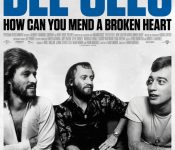
The Bee Gees: How Can You Mend a Broken Heart is one of the most enjoyable (and nostalgic) documentaries I’ve ever watched. Although the film is fundamentally about a group, the underlying theme is the love story of three incredibly talented brothers who cared deeply for each other but by most accounts would never have stayed together and endured were they not siblings. And, finally, it’s the story of a music industry that didn’t always know what to do with a band that defied norms.
I’m a bit late to the game in writing about this documentary (it was released in 2020) because I just saw it and found the story so compelling that I had to watch it again to fully grasp all the details (hearing the music a second time was just a bonus). There’s the birth of a group that catapults into a band, the success and the ups and downs but there’s also the culture of the 60’s, 70’s, and 80’s and the realization the brothers were better together. Barry Gibb, Maurice Gibb, and Robin Gibb were all singularly musical but the songs they wrote and sang together exponentially outshined their individual gifts.
No matter what people say about the Bee Gees (and a lot of people were very critical of their success, especially in the late 70’s and early 80’s), they were some of the best singers and songwriters of the 20th century. With more than 20 number 1 songs, the Bee Gees were sitting ducks. When you’re at the top of your game, there’s only one way to go and there were no shortage of critics (radio DJ’s and other artists) trying to knock them down. Claiming to be rock or pop purists, the critics unleashed a torrent of hate aimed at 3 gifted musicians who just wanted to write music, play instruments, and sing songs.
R & B, Pop, and Rock and Roll music exploded in the 1950s-1980’s with radio being the only public conduit available to most artists. If your music wasn’t on the radio, no one knew who you were. So, the gatekeepers had a lot of power in determining whose music was aired. And, people being people wanted to categorize artists into a specific genre and keep them there. The Bee Gees wouldn’t have it. They crossed barriers and at times, had to fight to get their music on the radio – often by sending the music to a station without their name on the tape or album to get their songs on the airwaves.
But, I save my harshest words for those who tried to destroy The Bee Gees with the “disco sucks” backlash (the filmmakers did an excellent job of exposing them). Most of the critics were a bunch of outspoken loudmouths who were envious, less talented, homophobic, racist, or self-described music purists. They were no more judges of good music than the next person. Music is a deeply personal choice that should applaud inclusion. It’s one thing to not like a song (don’t listen to it); it’s quite another to trash it.
When I hear songs like Fanny (Be Tender With My Love), Massachusetts, You Should be Dancing, How Can You Mend a Broken Heart, and To Love Somebody, I am in awe. These songs make me cry, dance, and remember there is a reason these songs prevail decades later: excellence.
The Bee Gees: How Can You Mend a Broken Heart is being streamed by HBO (who made the documentary). Don’t miss it.
Without giving it all away, in the end….they knew they were better together.


 Paddock Post
Comments are closed.