

“Getting A Life”
Several years ago, Helen Simpson published a collection of nine short stories called “Getting A Life.” Simpson, an English novelist is a master at writing about women overwhelmed with their lives as mothers – be they stay at home or working moms – and as wives to men who don’t think their responsibilities go beyond going to work everyday. At times hilarious – especially the scenes with children – but more often sad, the stories portray women in England who are trying to keep their lives, careers, and marriages together while raising children – not an easy feat. Read more 

“Runaway”
Alice Munro is often described as the foremost short story fiction writer of the times. Born in 1931 in Ontario, Munro is well-known throughout Canada for her short stories but is less well-known in the US and England where her work has often been overlooked for awards because Munro hasn’t written the definitive novel that tends to garner literary distinction and international recognition. One has to admire Munro for not caving into the pressure to write “the novel” and instead stay true to her art by continuing to publish short story collections. Read more
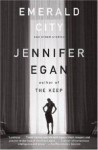
“Emerald City”
Jennifer Egan, who wrote the Pulitzer prize-winning novel “A Visit From The Goon Squad” published a collection of short stories under the title “Emerald City” in the UK in 1993, but did not release the book in the US until 1996. Sixteen years later and I feel like the kid who overslept and missed the exam or the athlete that got a late start because I didn’t know who Jennifer Egan was until recently. And, now I can’t get enough of her work. Read more
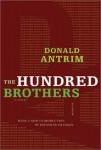
“The Hundred Brothers”
Brothers, brothers, and more brothers. I have six brothers that range in age from 30 to 52 whom I was reminded of when I read the book “The Hundred Brothers” by Donald Antrim. Published in 1997, I had never heard of the book until I read an essay in “Farther Away,” a collection of 21 essays by Jonathan Franzen. The essay, “The Corn King” which also serves as the introduction to “The Hundred Brothers” touts the book as “possibly the strangest novel ever published by an American” and yet, “it’s often hilarious, but there’s always a dangerous edge to the hilarity.” Read more

“Freedom,” “The Dovekeepers,” and “Fifty Shades of Grey”
Last month I was at R. Julia Booksellers, an independent bookstore in Madison, Connecticut to attend an author forum. A two-story building that looks like a town landmark, R. Julia Booksellers was opened twenty-two years ago by Roxanne Coady who has put and kept this small bookstore on the literary map despite the growth of the big chains and the mammoth bookseller of all: Amazon whose very existence threatens all independent booksellers (full disclosure: I buy books from Amazon). Read more
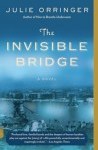
“The Invisible Bridge”
At a recent author forum in West Hartford, Connecticut, Julie Orringer spoke about how she came to write “The Invisible Bridge.” An American by birth, Orringer’s roots are in Hungary and the novel is loosely based on her grandfather and his brothers’ lives in the years leading up to and during World War II, before the family immigrated to the United States. As an adult, Orringer realized the stories she heard as a child needed to be told because people – and in particular her family – were deeply affected by the seismic events that took place in Europe in the late 1930’s and early 1940’s. That her ancestors were Jews in a country that was aligned with Germany at the time adds to the sense of horror. Using personal accounts from her family, historical research and a talent for story telling, Orringer wrote the novel “The Invisible Bridge:” a fictional story of a Hungarian family whose lives were shattered because they were Jewish. Read more
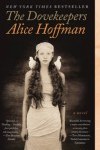
“The Dovekeepers”
Two years ago, I traveled with my family to Masada, a remote fortress on a mountain in the Judaean Desert of southern Israel by the Dead Sea. Masada is legendary for being the place where more than 900 Jews killed themselves rather than be tortured, killed or enslaved by the Romans approximately 2,000 years ago. The day of our visit was brutally hot and there was little shade in this fortress that King Herod built as a refuge. As the sun was beating down and I looked in every direction and saw only the dry earth of the desert and the salty Dead Sea in the distance, I remember thinking “why did they die for this?” “The Dovekeepers” by Alice Hoffman answers that question. Read more
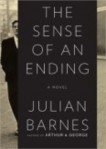
” The Sense of an Ending”
Winner of the 2011 Man Booker Prize (an annual award for the best original full length novel written in English by a citizen of the Commonwealth), “The Sense of an Ending” by Julian Barnes, is a story told from the perspective of Anthony (Tony) Webster, a British pensioner who finds cause to reexamine the past after an old friend comes back into his life. Read more
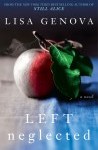
“Left Neglected”
Lisa Genova‘s second novel, “Left Neglected” is the fictional story of a young woman who experiences a severe brain injury after a car accident that resulted from her taking her eyes off the road to search for her cell phone. Eight days after the accident, Sarah Nickerson wakes up in a hospital, forever changed. Read more

“By Nightfall”
Michael Cunningham, author of “The Hours” (which won the Pulitzer Prize for Fiction in 1998) published his newest book “By Nightfall” in 2010. The story takes place in New York City and although the summary on the back of the book states the story is about Peter and Rebecca Harris, a couple in living in Manhattan, the real story is about Peter Harris. Throughout the entire book, the reader is privy to every thought Peter has to the effect of feeling like the reader is in the head of the main character. Read more


 Paddock Post