

“Eleanor and Park”
He loved how much they loved each other. It was the thing he thought about when he woke up scared in the middle of the night. Not that they loved him – they were his parents, they had to love him. That they loved each other. They didn’t have to do that.
16-year old Parker “Park” Sheridan lives in a suburb outside Omaha, Nebraska with his parents and younger brother, Josh. Next door are his paternal grandparents (his maternal grandparents live in Korea where his mother is from). A tight-knit family, the Sheridans “were practically the Waltons” although Park feels somewhat disconnected from the love fest his parents share between themselves. Read more 
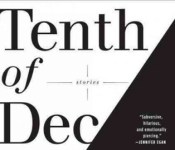
“Tenth of December”
George Saunders is a master short story-teller whose talent is skillfully displayed in The Tenth of December, a collection of ten short stories that was recently published (2013). A writer who seems to be writing about the mundane aspects of life – work, buying a puppy, planning a birthday party, or picking the kids up from school – Saunders is, in fact writing about the big picture: parenting, corporate greed and power, entitlement, human rights, mental illness, and despair. With George Saunders, there is always a message that says something about our culture and what we value and that’s what makes his short stories so thought-provoking, hilarious, and often heart-breaking. Read more
“Pastoralia”
Pastoralia is a collection of six short stories by George Saunders, a professor at Syracuse University who teaches creative writing in the MFA program, and a writer of essays, short stories, novellas (a narrative that is longer than a short story but shorter than a novel) and children’s books. Published in 2000, Pastoralia is Saunders’ second short story collection (the first being CivilWarLand in Bad Decline published in 1996) and my first introduction to his work. After reading Pastoralia, I was blown away and had several thoughts: Read more
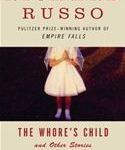
“The Whore’s Child”
Readers often ask me who my favorite writers are and although the question is tantamount to asking what my favorite foods are (there are many; where should I start?), I usually answer “Jonathan Franzan, John Irving, and Richard Russo” because the trio represents an elite group of writers whose prose never fails to keep my interest. Each author has his own writing style but they all share the traits of great writers – sentence fluency, character depth, memorable word choice, and an interesting story to tell. Read more
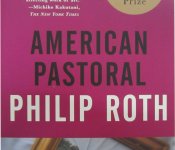
“American Pastoral”
Life is just a short period of time in which we are alive.
Winner of the Pulitzer Prize, American Pastoral by Philip Roth is a thought-provoking novel about post World War II life in America and specifically, how Jewish, Catholic, Protestant, and racial cultural norms interplay when forced together. Told from the perspective of Nathan “Skip” Zuckerman, a 62-year old writer who goes back to Newark, New Jersey for his 45th high school reunion in 1995, only to discover his childhood hero – Seymour “Swede” Levov and the older brother of a classmate – has just died at age 70 of prostate cancer that had metastasized. Having just seen the still “splendid-looking” Swede a few months prior at a restaurant in New York City where they had dinner together, Skip decides to write the life story of the Jewish kid from Newark who seemed to live the American Pastoral. Read more
“The Hunger Angel”
I KNOW YOU’LL COME BACK. I didn’t set out to remember her sentence. I carried it to the camp without thinking. I had no idea it was going with me. But a sentence like that has a will of its own. It worked inside me, more than all the books I had packed. I KNOW YOU’LL COME BACK became the heart shovel’s accomplice and the hunger angel’s adversary. And because I did come back, I can say: a sentence like that keeps you alive. Read more
“The Dinner”
That which falls is weak. That which lies on the ground is prey.
Several years ago I read a book called We Need to Talk About Kevin which was one of the most disturbing books I ever read. Written by Lionel Shriver, We Need to Talk About Kevin was about a little boy who grows up and commits unspeakable acts. The author – through the eyes of a mother – explored themes we rarely talk about: not loving your children enough, preferring one child over another, loving a spouse more than a child, and nature versus nurture.
So, when I picked up The Dinner by Herman Koch and started reading, I realized I was again reading a book that touched on the same mostly unspoken topics. Mostly unspoken because parents won’t admit they don’t love their children enough, or that one child is preferred over another, or that a spouse is loved more than a child..and most controversal of all, that parenting or genetics (or a combination of both) may have created a bad child. Read more
“The Buddha in the Attic”
In the United States, we commemorate December 7, 1941 as the day Pearl Harbor was attacked by the Japanese but we don’t recognize April 2, 1942 – the day nearly 120,000 US citizens and residents of Japanese ancestry were forced to leave their homes, property, businesses, and communities to live an internment camp – most of which were called Assembly Centers or Relocation Centers created by the US government. Read more
“Billy Lynn’s Long Halftime Walk”
No matter their age or station in life, Billy can’t help but regard his fellow Americans as children. They are bold and proud and certain in the way of clever children blessed with too much self-esteem, and no amount of lecturing will enlighten them as to the state of pure sin toward which war inclines. He pities them, scorns them, loves them, hates them, these children. These boys and girls. These toddlers, these infants. Americans are children who must go somewhere else to grow up , and sometimes die.
Billy Lynn’s Long Halftime Walk is a book whose title so perfectly resonates reality that most readers will come to think they are reading a work of non-fiction. Written by Ben Fountain, Billy Lynn’s Long Halftime Walk is both the story of Billy Lynn and a reflection of American culture. Read more
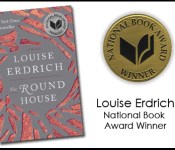
“The Round House”
With all my being, I wanted to go back to before all this had happened. I wanted to enter our good-smelling kitchen again, sit down at my mother’s table before she’d struck me and before my father had forgotten my existence. I wanted to hear my mother laugh until she snorted. I wanted to move back through time and stop her from returning to her office that Sunday for those files. Read more


 Paddock Post