

“The Mother Who Stayed”
Most books of short stories are collections of unrelated stories or “slices of life” according to Laura Furman, the long-time editor of the annual PEN/O.Henry Prize Short Stories. The good ones are concise, satisfying and self-contained. At the other end of the spectrum is the novel – a longer piece of literature whose chapters link together to form an involved story. Between the short story and the novel is the short story trilogy – three short stories linked together by a “set of characters whose lives are connected through family, location, or sheer coincidence.” The stories can stand alone – and many have in published journals – but collectively they result in a more revealing and thought-provoking piece of fiction. Read more 
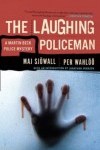
“The Laughing Policeman”
Mass murders seem to be an American specialty. And the compendium gives some plausible theories as to why it is so…the glorification of violence..the career-centered society. The sale of firearms by mail order …
The Laughing Policeman was written by Maj Sjowall and her husband Per Wahloo in 1970 although the book could have very well been written in the 21st century and still be relevant. The setting is Sweden, a small Scandinavian country in northern Europe that borders Finland and Norway. With a population of about 10 million, Sweden is widely considered to be a safe country (there were only 18 homicides (0.19 per 100,000 population) by firearms in 2010 while the United States recorded 11,078 firearm homicides (3.6 per 100,000 population)) the same year. So when a “person with a Suomi sub-machine gun model 37 fires 68 rounds of ammunition into nine people on a public transportation bus on a cold November night in 1967 on a deserted street in downtown Stockholm, the people of the country are shocked. Mass murders are not supposed to happen in Sweden. Read more
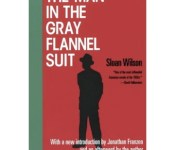
“The Man in the Grey Flannel Suit”
There were really four completely unrelated worlds in which he lived,…there was the crazy, ghost-ridden world of his grandmother and his dead parents. There was the isolated, best-not-remembered world in which he had been a paratrooper. There was the matter-of-fact, opaque-glass-brick partitioned world of places like the United Broadcasting Company and the Schanenhauser Foundation. And there was the entirely separate world populated by Betsy and Janey and Barbara and Pete, the only one of the four worlds worth a damn.
Tom Rath is an unhappy 33-year old married man, father of three trying to figure out what to do with his life. Raised in his grandmother’s once grand estate in Connecticut after his father’s untimely death and having returned from the war a changed man, Tom finds it difficult to live in the present because by his own admission, he is either brooding about the past or worrying about the future. Read more

“Half Broke Horses”
Painting the word “dog” on the side of a pig don’t make a pig a dog.
These words were spoken to Lily Casey Smith, the resourceful, no-nonsense heroine in Half Broke Horses by her husband, Jim Smith after she buys a used hearse and paints the words “School Bus” on the side. That hearse may not have technically been a school bus but for Lily – who could see past its intended purpose and envision piling children in the back – those painted on words let the world know she was a force to be reckoned with. If she wanted a hearse to be a school bus, by God it was going to be a school bus. Read more
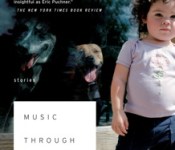
“Music Through the Floor”
Music Through the Floor is a collection of ten fictional short stories written by Eric Puchner, a writer and professor of literature at Claremont McKenna College in California. Published in 2005, Music Through the Floor was a finalist for the New York Public Library’s Young Lions Fiction Award and The California Book Award – a tremendous accomplishment for an author’s first publication of short stories. Read more

“The Box”
Günter Grass, the German writer awarded the Nobel Prize in Literature in 1999 for his collective body of work is best known for his literary masterpiece The Tin Drum which was published in 1959. The book was adapted into a film in 1979 and won the Academy Award for Best Foreign Language Film. Nearly 50 years later in 2006 as Grass was approaching his 80th birthday, he published Peeling the Onion – an autobiographical novel that begins at the end of his childhood when World War II broke out and concludes in 1959 with the publication of his first and most famous novel. In 2008, Grass published The Box, a novel considered to be a continuation of where Peeling the Onion ended although the author claims the story is a work of autobiographical fiction. Read more
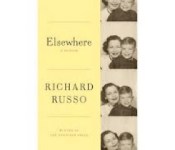
“Elsewhere”
Reading was not a duty but a reward, and from that I intuited a vital truth: most people are trapped in a solitary existence, a life circumscribed by want and failures of imagination, limitations from which readers are exempt. You can’t make a writer without first making a reader, and that’s what my mother made me.
Those are the written words of Richard Russo, the Pulitzer prize-winning author of Empire Falls and most recently Elsewhere – a memoir of his life as the son of Jean Russo – a woman he credits with directing his life into a field where being “obsessive, dogged, and rigid” are assets rather than liabilities. Read more
“Dear Life”
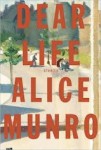
Alice Munro recently published a new collection of short stories entitled Dear Life. A brilliant anthology of 14 short stories with mostly single word titles that signify a key event, description or a character in a story, Dear Life is really two books in one: ten fictional short stories told from the perspective of characters striving to make sense of people in their lives, random events, and the decisions made; and four stories collectively called Finale that Munro says”form a separate unit, one that is autobiographical in feeling, thought not, sometimes, entirely so in fact. I believe they are the first and last – and the closest – things I have to say about my own life.” Read more
“May We Be Forgiven”
There are paths, forks in the road, journeys we must take. Sometimes it’s not a choice, but about what we do with what we are given.
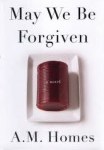
May We Be Forgiven was written by Amy M. Homes, an American writer who teaches creative writing at Princeton University and who goes by the pen name: A.M. Homes. Published in September, 2012, May We Be Forgiven is a fast paced novel that starts with a bang (literally) and gives new meaning to “The Big Bang Theory” of how a family is formed. Although many people think a family is created by a marriage or the birth of a child, a family is formed by people uniting or expanding in many different ways, both conventional and non-conventional. And, when a family implodes, what are the survivors to do? Run and escape or come together? This is the dilemma faced by the major characters in May We Be Forgiven. Read more

“Foreign Affairs”
…. it is taken for granted that people over fifty are as set in their ways as elderly apple trees, and as permanently shaped and scarred by the years they have weathered. The literary convention is that nothing major can happen to them except through subtraction. They may be struck by lightning or pruned by the hand of man; they may grow weak or hollow; their sparse fruit may become misshapen, spotted, or sourly crabbed. They may endure these changes nobly or meanly. But, they cannot, even under the best of conditions, put out new growth or burst into lush and unexpected bloom. Read more


 Paddock Post