
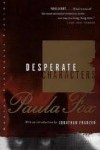
“Desperate Characters”
“Desperate Characters” was written by Paul Fox more than 40 years ago (1970) and yet, the story seems timeless. Sophie and Otto Brentwood are in their 40’s and have been married 15 years. Childless (and not really unhappy about it), well-educated, and established (he’s a lawyer, she’s a translator of books), they have a brownstone in Brooklyn with a modern stainless steel equipped kitchen, cedar planked floors, and rooms that seamlessly flow into each other (the result of removing the sliding doors). There is a Mercedes parked outside in a coveted street parking space that Otto reluctantly uses only when leaving town for fear of losing his space. And, there is the weekend home in the village of Flynders on Long Island which is neither on the water nor part of the Hamptons social scene. Inhabiting a world both in Brooklyn and Flynders in which they have nothing in common with the locals or the neighbors, Sophie and Otto are the ultimate gentrifiers basking in the idea of living in a changing area but horrified by the people and activity outside their windows. Read more 

“White Noise”
Don Delillo is an American novelist who was born in 1936 and started writing novels in the 1960’s. His eighth book, “White Noise” won the National Book Award for Fiction in 1985. Set in a midwestern college town called Blacksmith on the campus of “College on the Hill,” “White Noise” is told from the perspective of Jack Gladney, a 51-year old professor who chairs the Hitler Studies Department at the local college. Gladney is married to Babette (his 5th wife) and together they have six children: his three – Mary Alice (19), Heinrich (14), and Steffie (9) and her three: Denise (11), Eugene (8) and Wilder (3). It may seem like the Brady Bunch but the Gladney family is more like George Banks (Steve Martin from “Father of the Bride”) meets “Mother’s Little Helper” on the set of “Home Alone.” Read more
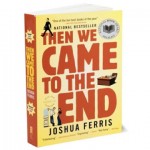
“Then We Came To The End”
There are many books about families and the dysfunction inherent in the groups we were born into but not many books are written about the workplace where people choose to spend at least a third of their day (with the other third devoted to family and friends and the remaining third supposedly sleeping). Workplaces become a microcosm of a family – a big family – and are full of dysfunctional and odd characters who can be hilarious, annoying, intimidating but also endearing. Enter the employees of a well-known Chicago advertising agency in the fictional novel “Then We Came To The End” by Joshua Ferris. Read more
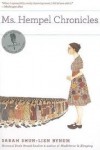
“Ms. Hempel Chronicles”
“Ms. Hempel Chronicles,” a finalist for the Pen Vaulkner Award for Fiction in 2009 was written by Sarah Shun-Lien Bynum, a writer who graduated from Brown University and the University of Iowa Writer’s Workshop and now teaches writing and literature at Otis College of Art and Design in Los Angeles, California. Read more

“Mrs. Bridge”
More than 50 years ago, Evan S Connell wrote “Mrs. Bridge” – a fictional novel that is remarkable in many ways. “Mrs. Bridge” is the story of India Bridge, a woman who was born in the late 19th century and came of age during World War 1 and yet, the reader doesn’t realize this information until half-way through the novel because the story is timeless. The story of Mrs. Bridge is not the story of events during Mrs. Bridge’s lifetime, but of the day-to-day events in her life. At 26, India marries Walter Bridge and becomes Mrs. Bridge although she quickly realizes that love is not always an equitable affair after Mr. Bridge spurns her advances early in their marriage while holding her secure in his arms as he falls back asleep – an action that deftly defines their long life together: security, yes; passion, no. Read more

“Getting A Life”
Several years ago, Helen Simpson published a collection of nine short stories called “Getting A Life.” Simpson, an English novelist is a master at writing about women overwhelmed with their lives as mothers – be they stay at home or working moms – and as wives to men who don’t think their responsibilities go beyond going to work everyday. At times hilarious – especially the scenes with children – but more often sad, the stories portray women in England who are trying to keep their lives, careers, and marriages together while raising children – not an easy feat. Read more

“Runaway”
Alice Munro is often described as the foremost short story fiction writer of the times. Born in 1931 in Ontario, Munro is well-known throughout Canada for her short stories but is less well-known in the US and England where her work has often been overlooked for awards because Munro hasn’t written the definitive novel that tends to garner literary distinction and international recognition. One has to admire Munro for not caving into the pressure to write “the novel” and instead stay true to her art by continuing to publish short story collections. Read more

The Piano Tuner
Rain was pouring down from the skies causing mud puddles to turn into streams and parts of the dirt road to wash out. Still, Vlatko made his way down the mile-long driveway to the lone house on the lake. He parked the car, turned the ignition off and noticed the wipers stopped mid-way on the windshield as if his timing was slightly off. Vlatko always thought windshield wipers reminded him of a metronome, the tool musicians use to maintain a consistent tempo while playing music. Read more
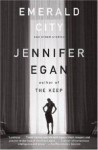
“Emerald City”
Jennifer Egan, who wrote the Pulitzer prize-winning novel “A Visit From The Goon Squad” published a collection of short stories under the title “Emerald City” in the UK in 1993, but did not release the book in the US until 1996. Sixteen years later and I feel like the kid who overslept and missed the exam or the athlete that got a late start because I didn’t know who Jennifer Egan was until recently. And, now I can’t get enough of her work. Read more
“The Hundred Brothers”
Brothers, brothers, and more brothers. I have six brothers that range in age from 30 to 52 whom I was reminded of when I read the book “The Hundred Brothers” by Donald Antrim. Published in 1997, I had never heard of the book until I read an essay in “Farther Away,” a collection of 21 essays by Jonathan Franzen. The essay, “The Corn King” which also serves as the introduction to “The Hundred Brothers” touts the book as “possibly the strangest novel ever published by an American” and yet, “it’s often hilarious, but there’s always a dangerous edge to the hilarity.” Read more


 Paddock Post