
“Into the Wild”
…a challenge in which a successful outcome is assured, isn’t a challenge at all.
In September, 1992 a young man’s decomposing body was found in an abandoned bus in the Alaskan wilderness by a group of hunters. The young man was Christopher “Chris” McCandless (who was also known as Alex Supertramp, a trail name he bestowed upon himself), a 24-year old adventurer who had spent the past four months of his life hunting and foraging in an interior part of Alaska known as the Stampede Trail. When the world learned McCandless was from a well-to-do family in Virginia and an honors graduate of Emory University, people were confounded and perplexed as to what would cause a prosperous, young, well-educated and smart man to lead a nomadic life that would ultimately lead to his untimely death.
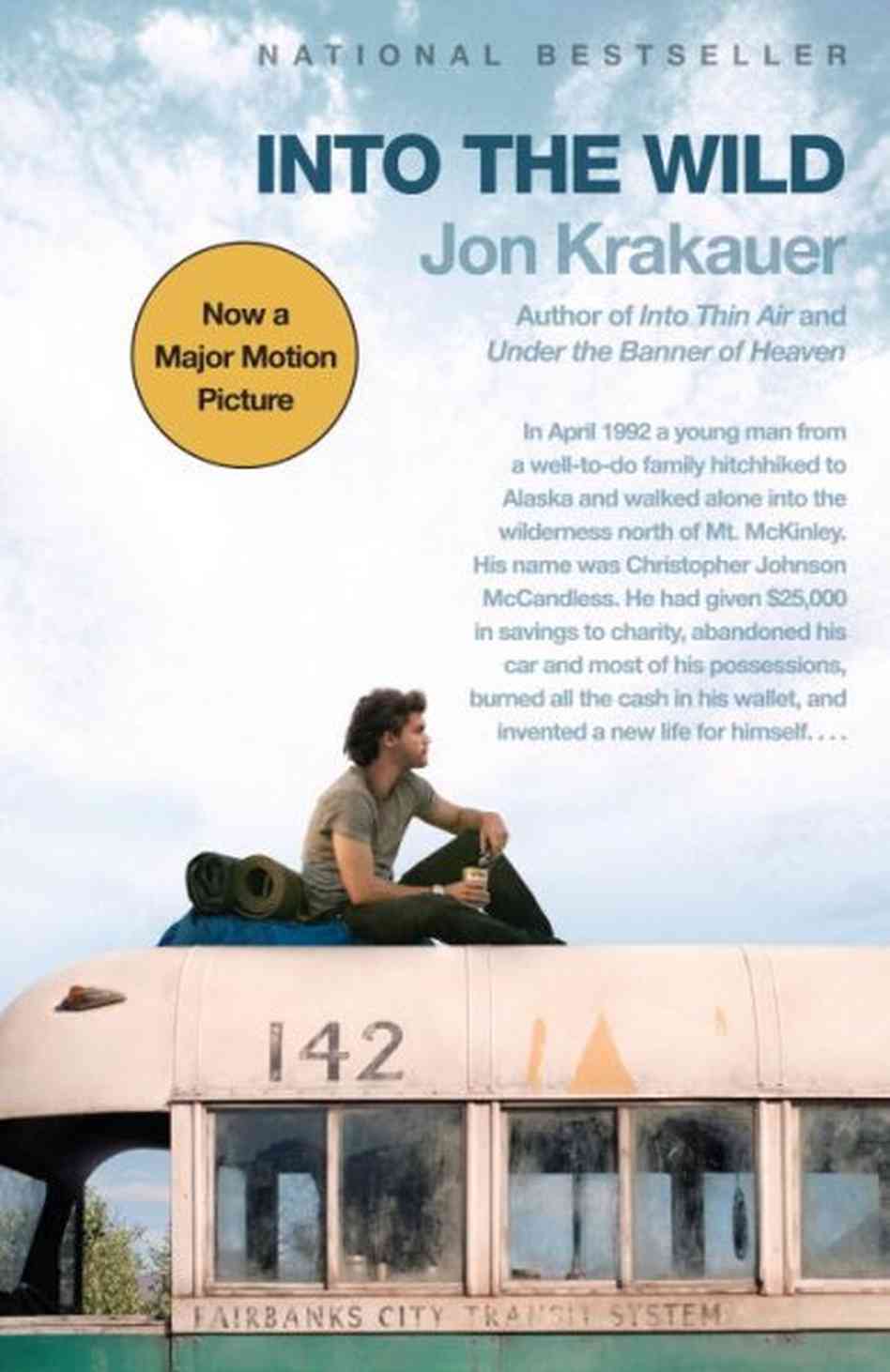 The editors of Outside magazine were sufficiently intrigued to commission John Krakauer – a journalist and author who is best known for his short stories and books on the outdoors, mountain climbing, and himself an experienced climber and outdoor enthusiast – to write a 9,000 word essay on the events that led up to McCandless’s death. In January, 1993, Outside magazine published Krakauer’s article: “How Christopher McCandless Lost His Way in the Wilds” but Krakauer didn’t feel the article told the whole story so he spent a year “retracing the convoluted path” that led to McCandless’s death and then wrote Into The Wild, a 203 page national bestseller published in 1996.
Krakauer writes that “McCandless wasn’t some feckless slacker, adrift and confused, racked by existential despair. To the contrary: his life hummed with meaning and purpose. But the meaning he rested from existence lay beyond the comfortable path…” and was found on the road, living without possessions, cultivating friendships and accepting the generosity of others along the way; working only when money was absolutely needed to further finance his self-directed journey.
Although McCandless’s unique character was visible from a young age, he led a relatively conventional life until 1990, when he graduated from college. As Krakauer points out, McCandless had done what his parents expected of him – graduated from college – but it was now time for him to lead the life he was meant to live. He “loaded all his belongings into his little car and headed west without an itinerary” after giving away his money – $24,000 to a charity dedicated to fighting hunger. He told no one where he was going and he cut off contact with his family. For two years, McCandless drove, walked, and hitchhiked across North America with the goal of eventually reaching Alaska, a place that represented unchartered territory to the young adventurer. But, as Krakauer points out:
In coming to Alaska, McCandless yearned to wander uncharted country, to find a blank spot on the map. In 1992, however, there were no more blank spots on the map-not in Alaska , not anywhere. But Chris, with his idiosyncratic logic, came up with an elegant solution to his dilemma: He simply got rid of the map..
which contributed, in part to his death. The wilderness can be unforgiving and no matter how young, strong, and smart a person is, lack of experience and character traits can stifle the incredible drive humans have to survive. Krakauer points to Chris’s tendency to “resist instruction of any kind” and his misplaced belief in himself as contributors to his death in noting the only way McCandless “cared to tackle a challenge was head-on, right now, applying the full brunt of his extraordinary energy” which had worked in the past but was not enough in the Alaska wilderness.
McCandless arrived in Alaska in April of 1992 and by mid-August of 1992, he had died alone from what appeared to be starvation. But, the reasons McCandless died are so much deeper than what the medical examiner wrote on his death certificate. Into The Wild is the true story of a young man who wanted so much more out of life than what everyone was telling him he should have and so his journey is the real story.
It is easy, when you are young, to believe that what you desire is no less than what you deserve, to assume that if you want something bad enough, it is your God-given right to have it.
Comments are closed.


 Paddock Post
I think it’s a combination of both – he was doing exactly what he wanted but at the end was in over his head/beyond his abilities and paid a hefty price.
I love this book. and the movie. so thought-provoking. was is a terrible waste of a young life, or a man doing exactly what he wanted, no matter what the consequences? I still can’t decide