
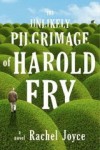
“The Unlikely Pilgrimage of Harold Fry”
The story of a pilgrimage whether it be a hike up the Pacific Coast Trail as depicted in Cheryl Strayed’s book “Wild,” a bike ride through Spain (It’s Not About the Tapas by Polly Evans) or the infamous 500 mile walk from southern France to western Spain called the Camino de Santiago can be inspiring. These types of adventures are usually triggered by a crisis or life changing event (the Camino de Santiago is often called The European Divorcee Trail) and center around a person committing to a physically challenging adventure to find meaning, closure, or simply time to think. When I hear of a pilgrimage, the desire for personal enlightenment and a better understanding of self comes to mind and this is the overriding theme in The Unlikely Pilgrimage of Harold Fry. Read more 
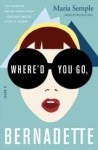
“Where’d You Go, Bernadette”
“Where’d You Go, Bernadette” by Maria Semple is a hilarious story about a family that lives in Seattle, Washington. Bernadette Fox is an architect who moves from Los Angeles, California with her husband, Elgin Branch whose animation company was acquired by Microsoft. Bernadette and Elgin didn’t have to leave sunny California but after she experiences a career crisis (which she refers to as the “hideous event“) and a strong recommendation to come north from Big Brother (the author’s affectionate name for Microsoft), the couple decide to pack up and relocate to “Rain City.” Read more
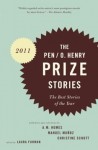
The Pen/O.Henry Prize Stories
The art of the great short story is well presented in “The Pen/O.Henry Prize Stories” – a collection of twenty short stories chosen annually by a Series Editor (Laura Furman has held the position since 2003). The criteria? All stories had to have been written originally in English and published in an American or Canadian periodical. Widely regarded as one of the most prestigious awards for short fiction, the Pen/O.Henry Prize Stories offer readers some of the finest examples of short fiction written in any given year. Read more
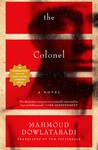
“The Colonel”
The Colonel was written by Mahmoud Dowlatabadi, a Tehran-based writer and an Iranian professor of Literature who is a leading proponent of social and artistic freedom. Banned in Iran, the original version of The Colonel was written in Persian and published in Germany before being translated in English by Tom Patterdale. Recently released (April, 2012) in the United States, The Colonel is the story of a man who served in the Shah’s army and who condemns himself for committing two mortal sins in his life: killing his wife who committed adultery and refusing an army order to go to Dhofar (a province in southwest Oman) to “slaughter a bunch of hungry rebels on the grounds that they were a Soviet threat” (the Soviets had a substantial base there at the time) in 1973. Read more
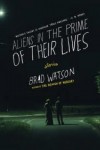
“Aliens In The Prime Of Their Lives”
When I first picked up “Aliens in the Prime of Their Lives,” I thought I was holding a book for young adults when in fact, the 12 short stories are about young people – an under-appreciated mother, a rebellious teen, an angry lover who has been abandoned, a divorced father, a sexually abused teen, a mother who looses a child, and a young boy’s family vacation. There are also the experiences of a father and son at “Bodies: The Exhibition” which showcases preserved human bodies dissected to display bodily functions, a young couple’s adventures in a car, the hunters that become the hunted, and a couple’s last moments on a doomed aircraft. This 263-page book reminded me of the “The Twilight Zone” – the American television series from the early 1960’s that depicted weekly singular episodes of disturbing, paranormal, or futuristic phenomena in seemingly normal day-to-day life. Read more
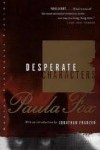
“Desperate Characters”
“Desperate Characters” was written by Paul Fox more than 40 years ago (1970) and yet, the story seems timeless. Sophie and Otto Brentwood are in their 40’s and have been married 15 years. Childless (and not really unhappy about it), well-educated, and established (he’s a lawyer, she’s a translator of books), they have a brownstone in Brooklyn with a modern stainless steel equipped kitchen, cedar planked floors, and rooms that seamlessly flow into each other (the result of removing the sliding doors). There is a Mercedes parked outside in a coveted street parking space that Otto reluctantly uses only when leaving town for fear of losing his space. And, there is the weekend home in the village of Flynders on Long Island which is neither on the water nor part of the Hamptons social scene. Inhabiting a world both in Brooklyn and Flynders in which they have nothing in common with the locals or the neighbors, Sophie and Otto are the ultimate gentrifiers basking in the idea of living in a changing area but horrified by the people and activity outside their windows. Read more

“White Noise”
Don Delillo is an American novelist who was born in 1936 and started writing novels in the 1960’s. His eighth book, “White Noise” won the National Book Award for Fiction in 1985. Set in a midwestern college town called Blacksmith on the campus of “College on the Hill,” “White Noise” is told from the perspective of Jack Gladney, a 51-year old professor who chairs the Hitler Studies Department at the local college. Gladney is married to Babette (his 5th wife) and together they have six children: his three – Mary Alice (19), Heinrich (14), and Steffie (9) and her three: Denise (11), Eugene (8) and Wilder (3). It may seem like the Brady Bunch but the Gladney family is more like George Banks (Steve Martin from “Father of the Bride”) meets “Mother’s Little Helper” on the set of “Home Alone.” Read more
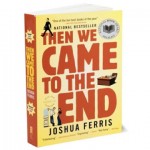
“Then We Came To The End”
There are many books about families and the dysfunction inherent in the groups we were born into but not many books are written about the workplace where people choose to spend at least a third of their day (with the other third devoted to family and friends and the remaining third supposedly sleeping). Workplaces become a microcosm of a family – a big family – and are full of dysfunctional and odd characters who can be hilarious, annoying, intimidating but also endearing. Enter the employees of a well-known Chicago advertising agency in the fictional novel “Then We Came To The End” by Joshua Ferris. Read more
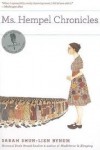
“Ms. Hempel Chronicles”
“Ms. Hempel Chronicles,” a finalist for the Pen Vaulkner Award for Fiction in 2009 was written by Sarah Shun-Lien Bynum, a writer who graduated from Brown University and the University of Iowa Writer’s Workshop and now teaches writing and literature at Otis College of Art and Design in Los Angeles, California. Read more

“Mrs. Bridge”
More than 50 years ago, Evan S Connell wrote “Mrs. Bridge” – a fictional novel that is remarkable in many ways. “Mrs. Bridge” is the story of India Bridge, a woman who was born in the late 19th century and came of age during World War 1 and yet, the reader doesn’t realize this information until half-way through the novel because the story is timeless. The story of Mrs. Bridge is not the story of events during Mrs. Bridge’s lifetime, but of the day-to-day events in her life. At 26, India marries Walter Bridge and becomes Mrs. Bridge although she quickly realizes that love is not always an equitable affair after Mr. Bridge spurns her advances early in their marriage while holding her secure in his arms as he falls back asleep – an action that deftly defines their long life together: security, yes; passion, no. Read more


 Paddock Post