
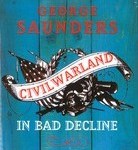
“CivilWarLand in Bad Decline”
In these times, strange times that they are, seeing someone do something that’s not patently selfish and fucked-up is like a breath of fresh air, good clean fresh air, not that any one of us would know good clean fresh air if a vial of it swooped down and bit us on the ass!
George Saunders has a way with words that makes his short stories both horrific and hilarious. A writer with a message, Saunders writes of modern-day culture – corporate greed, authority, inequality, socio-economic class, narcissism, hate, racism, helicopter parenting, plastic surgery, obesity, physical perfection – and magnifies them a thousand times to make a point: we live in one messed-up world. Read more 
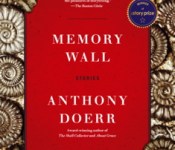
“Memory Wall”
Seven decades of stories, five decades of marriage, four decades of working…..spatulas and salad forks, novels and recipes, nightmares and daydreams, hellos and goodbyes. Could it all really be wiped away?
Where do our memories go once we’ve lost our ability to summon them? Read more

“Leaving The Atocha Station”
No writer is free to renounce his political moment but literature reflects politics more than it affects it, an important distinction.
Ben Lerner was 24 years old when he traveled to Madrid, Spain on a Fulbright Scholarship in 2003. A recent graduate of Brown University with a B.A. in Political Theory and an M.F.A. in Poetry, Lerner may have chosen Spain because of its troubled past – many poets writers, and artists were murdered, jailed, or forced into exile during the Spanish Civil War (1936-1939) – or because the country offers a unique perspective on politics, fascism, and terror – all of which make Spain a rich playground for those in the arts. Read more
“The Ministry of Guidance Invites You to Not Stay”
We have an idea of what it is to be French or Italian, or to live in Paris or in Florence, based on a certain familiarity with those cultures and the writings of English-speakers who’ve lived there, but we have little idea of what it is to be Persian or what Iranian society is really like. Read more
“How To Be Alone”
I wonder if our current cultural susceptibility to the charms of materialism – our increasing willingness to see psychology as chemical, identity as genetic, and behavior as the product of bygone exigencies of human evolution – isn’t intimately related to the postmodern resurgence of the oral and the eclipse of the written: our incessant telephoning, our ephemeral e-mailing, our steadfast devotion to the flickering tube. Read more
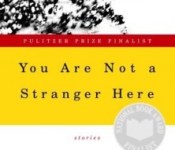
“You Are Not A Stranger Here”
You and all the inheritors of wealth who think life is a matter of perfected sentiment. You are wrong.
Adam Haslett’s first published book, You Are Not A Stranger Here was a both a finalist for the National Book Award in 2002 and the Pulitzer Prize in 2003. – a notable achievement that few writers attain. A collection of nine short stories, You Are Not A Stranger Here was written by a master storyteller who skillfully weaves psychosis, devotion, death, clairvoyance, neglect, suicide, abandonment, and homosexuality into the lives of his characters. Cleverly written, many of the stories contain a train wreck the reader rarely sees coming which is the beauty of Haslett’s writing – the element of surprise. Read more
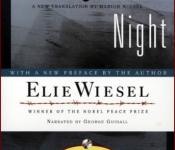
“Night”
NIGHT. No one was praying for the night to pass quickly. The stars were but sparks of the immense conflagration that was consuming us. Were this conflagration to be extinguished one day, nothing would be left in the sky but extinct stars and unseeing eyes.
In May, 1944, 15-year old Elie Wiesel and his family – his mother, father and three sisters – were ordered from their home in Sighet, Transylvania (the central part of Romania) and transported to the Auschwitz concentration camp, and then to Buchenwald. Separated from his mother and sisters, Wiesel and his father managed to stay together for eight months, before his father died in January, 1945. Three months later in April, 1945 the camp was liberated and Elie Wiesel began the journey of “one who has emerged from the Kingdom of Night…” Read more
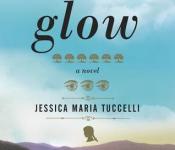
“Glow”
It is October 31. Halloween. I have long lost my love of masks and phantoms.
So says, 26-year old Amelia “Mia” J. McGee, a woman of Cherokee and Scotch-Irish descent, and a writer for the NAACP and WEB in Washington, DC who has returned to Hopewell County, Georgia to find her missing 11-year old daughter, E.F. “Ella” McGee. Three days prior a rock had been thrown through the McGee’s window with a note that said “The next one won’t be a rock.” Fearing for her daughter’s life, Mia put Ella on a bus to Georgia and arranges for her brother, Buddy to pick up the child at the bus station. But when Ella doesn’t make it, Mia decides to vacate her plans to march in the largest picket in Washington, D.C.’s history on October 31, 1941 and return to her childhood home to find the little girl she named after Elizabeth Freeman, “the great suffragist and speaker.” Read more
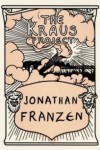
“The Kraus Project”
Our Far Left may hate religion and think we coddle Israel, our Far Right may hate illegal immigrants and think we coddle black people, and nobody may know how the economy is supposed to work now that our manufacturing jobs have gone overseas, but the actual substance of our daily lives is total electronic distraction. We can’t face the real problems; we spent a trillion dollars not really solving a problem in Iraq that wasn’t really a problem; we can’t even agree on how to keep health care costs from devouring the GNP. What we can all agree to do instead is to deliver ourselves to the cool new media and technologies, to Steve Jobs, Mark Zuckerberg and Jeff Bezos, and let them profit at our expense. Read more
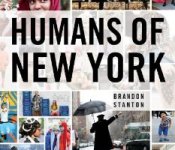
Why You Should Buy “Humans of New York”
Two days ago, Humans of New York (“HONY“), a photography book by Brandon Stanton was released and although the chatter and buzz made me a skeptic initially, HONY really is a book worth buying for the following reasons: Read more


 Paddock Post