
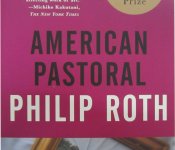
“American Pastoral”
Life is just a short period of time in which we are alive.
Winner of the Pulitzer Prize, American Pastoral by Philip Roth is a thought-provoking novel about post World War II life in America and specifically, how Jewish, Catholic, Protestant, and racial cultural norms interplay when forced together. Told from the perspective of Nathan “Skip” Zuckerman, a 62-year old writer who goes back to Newark, New Jersey for his 45th high school reunion in 1995, only to discover his childhood hero – Seymour “Swede” Levov and the older brother of a classmate – has just died at age 70 of prostate cancer that had metastasized. Having just seen the still “splendid-looking” Swede a few months prior at a restaurant in New York City where they had dinner together, Skip decides to write the life story of the Jewish kid from Newark who seemed to live the American Pastoral. Read more 
“The Hunger Angel”
I KNOW YOU’LL COME BACK. I didn’t set out to remember her sentence. I carried it to the camp without thinking. I had no idea it was going with me. But a sentence like that has a will of its own. It worked inside me, more than all the books I had packed. I KNOW YOU’LL COME BACK became the heart shovel’s accomplice and the hunger angel’s adversary. And because I did come back, I can say: a sentence like that keeps you alive. Read more
“The Dinner”
That which falls is weak. That which lies on the ground is prey.
Several years ago I read a book called We Need to Talk About Kevin which was one of the most disturbing books I ever read. Written by Lionel Shriver, We Need to Talk About Kevin was about a little boy who grows up and commits unspeakable acts. The author – through the eyes of a mother – explored themes we rarely talk about: not loving your children enough, preferring one child over another, loving a spouse more than a child, and nature versus nurture.
So, when I picked up The Dinner by Herman Koch and started reading, I realized I was again reading a book that touched on the same mostly unspoken topics. Mostly unspoken because parents won’t admit they don’t love their children enough, or that one child is preferred over another, or that a spouse is loved more than a child..and most controversal of all, that parenting or genetics (or a combination of both) may have created a bad child. Read more
“The Buddha in the Attic”
In the United States, we commemorate December 7, 1941 as the day Pearl Harbor was attacked by the Japanese but we don’t recognize April 2, 1942 – the day nearly 120,000 US citizens and residents of Japanese ancestry were forced to leave their homes, property, businesses, and communities to live an internment camp – most of which were called Assembly Centers or Relocation Centers created by the US government. Read more
“Billy Lynn’s Long Halftime Walk”
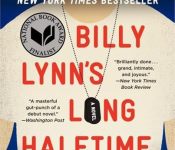
No matter their age or station in life, Billy can’t help but regard his fellow Americans as children. They are bold and proud and certain in the way of clever children blessed with too much self-esteem, and no amount of lecturing will enlighten them as to the state of pure sin toward which war inclines. He pities them, scorns them, loves them, hates them, these children. These boys and girls. These toddlers, these infants. Americans are children who must go somewhere else to grow up , and sometimes die.
Billy Lynn’s Long Halftime Walk is a book whose title so perfectly resonates reality that most readers will come to think they are reading a work of non-fiction. Written by Ben Fountain, Billy Lynn’s Long Halftime Walk is both the story of Billy Lynn and a reflection of American culture. Read more
The Happy Herbivore
When my daughter set upon being a vegan, I was often perplexed at how to make flavorful, healthy meals that the whole family – carnivore man, vegetarian me, and vegan daughter – would enjoy. I initially consulted Forks Over Knives – both the original book and the cookbook – but often found the recipes time-consuming. I wanted quick, easy recipes with a lot of flavor which I found in The Happy Herbivore Abroad followed by The Happy Herbivore by Lindsay Nixon. Nixon, a lawyer by education who switched careers to follow her passion for food and her love for animals. When someone asks her why she is a vegan, she replies “for my health, the animals, the environment, my pocketbook…and for you.” Read more
“The Round House”
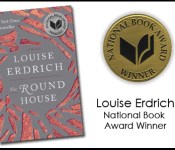
With all my being, I wanted to go back to before all this had happened. I wanted to enter our good-smelling kitchen again, sit down at my mother’s table before she’d struck me and before my father had forgotten my existence. I wanted to hear my mother laugh until she snorted. I wanted to move back through time and stop her from returning to her office that Sunday for those files. Read more

“Man’s Search for Meaning”
…a man’s suffering is similar to the behavior of gas. If a certain quantity of gas is pumped into an empty chamber, it will fill the chamber completely and evenly, no matter how big the chamber. Thus suffering completely fills the human soul and conscious mind, no matter whether the suffering is great or little. Therefore the “size” of human suffering is absolutely relative. Read more

“Felicia’s Journey”
Each time he hoped that a friendship would last for ever, that two people could be of help to one another, that strangers seeing them together would say they belonged like that.
Felicia’s Journey was written by William Trevor and awarded a Whitbread Book Award (now known as the Costa Book Award) – a literary prize given to a book (by an author in Great Britain or Ireland) that is both enjoyable to read and appeals to a wide audience. Published in 1994, Felicia’s Journey is the story of a young pregnant girl who runs away from a stifling household in a small village in Ireland to find the boyfriend who left her in a difficult situation. Read more

“Appointment in Samarra”
The road was his. He wanted to drive on the left side and zigzag like an army transport and idle along at four miles an hour. But one time when he thought the road was his he had done all these things, finally to be arrested for drunken driving by a highway patrolman who had been following him all the while. “You’d think you owned the road,” the patrolman had said; and Julian could not answer that was exactly what he had been thinking. Read more


 Paddock Post