

“A Personal Matter”
Every time you stand at a crossroads of life and death, you have two universes in front of you, one loses all relation to you because you die, the other maintains its relation for you to survive in it.
Kenzaburō Ōe is a Japanese writer of essays, short stories, and novels that primarily deal with social, cultural, political, and philosophical issues. Born in 1935, Ōe has had many of his works translated into English and was awarded the Nobel Prize for Literature in 1994. Influenced by Kafka, Twain, Lagerlöf, and a host of French writers, Ōe often writes of the desire for adventure, the mundane parts of life, and the truly horrific parts of our existence in a nuclear age. But, the biggest influence on Ōe’s literary career seems to be his firstborn son, Hikari. Read more 
“A Thousand Acres”
What is a farmer?
A farmer is a man who feeds the world.
What is a farmer’s first duty?
To grow more food.
What is a farmer’s second duty?
To buy more land.
Why does a society value appearances, secrets, and hard work over basic human rights? And, what does it say about a society that condemns a victim for speaking out against a perpetrator for unspeakable crimes? These are the questions Jane Smiley seems to be asking in her Pulitzer Prize winning novel, A Thousand Acres. Published in 1991, A Thousand Acres refers to that magic number of acreage that most midwest farmers ascribe to own – a thousand acres of rich, fertile Iowa farmland. It’s the number that sets one farmer apart from another, especially if the land has been handed down from generation to generation and is unencumbered by a mortgage. Read more

Alice Childress and the Wedding Band
The Negro woman has almost been omitted as important subject matter in the general popular American drama, television, motion pictures and radio. ~Alice Childress
When I first heard the name Alice Childress while visiting Oberlin College in Ohio, my curiosity was piqued. Who exactly was Alice Childress and why have I never heard of her? The answer to the first question is that Alice Childress (1916-1994) was an American actress, activist, union organizer, playwright, director, and author. She was also a black woman fighting for her voice to be heard and her talent recognized in industries dominated by white men. Read more
“Purity”
Secrets were power. Money was power. Being needed was power. Power, power, power: how could the world be organized around the struggle for a thing so lonely and oppressive in the having of it?
In Jonathan Franzen’s newest novel Purity, the author introduces the reader to Purity (“Pip”) Tyler, a 23-year old recent college graduate with $130,000 in student loan debt living in a squatter’s house in Oakland, California. Distancing herself from the mother who raised her in the Santa Cruz mountains, trying to find her biological father, and employed in a dead-end job, Pip is all but disillusioned about the world and the impact she will make on it. When offered an internship to work for the Sunlight Project – an organization that prides itself on leaking government secrets – in Bolivia, Pip takes a leap of faith, quits her job, packs up, and moves to South America. Read more
“The Men’s Club”
Brotherhood is exclusive, not universal.
35 years ago, men rarely sought out each other’s company outside of a sporting event, a bar, or a bachelor party. While women were leaning on each other and seeking camaraderie in Mommy & Me events, book clubs, and aerobic classes, men went to work, fulfilled family obligations, and briefly escaped to society sanctioned events which did not generally include meeting at one of their homes for a men’s club get together. So, when a group of seven men – a retired professional basketball player, a tax accountant, a lawyer, two psychotherapists, and two college professors – come together to form a men’s club – “a regular social possibility outside of our jobs and marriages,” there is curiosity and reluctance to take a road less traveled, as depicted in the fictional novel, The Men’s Club. Read more
“Ordinary Love and Good Will”
But it is not necessarily the ones you love the most that have the most effect on you.
Jane Smiley, Pulitzer prize-winning author of A Thousand Acres published Ordinary Love & Good Will – two short stories that explore the effects that people’s actions have on their children – in 1989. Although the stories are very different, the reader can’t help but see the long-lasting and indelible effects on the children of adults who don’t think about their behavior and consequences, who think of themselves first, who can’t control their urges, and who are often in denial. Read more
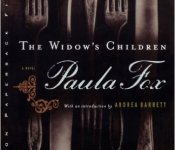
“The Widow’s Children”
But once in the world, she learned everyone’s lesson – families were not as they seemed, she grew artful in spotting the cracks in domestic facades. Wasn’t everyone damaged….
For many years, a book – The Widow’s Children – sat on a shelf in my bookcase untouched because I had read that the author – Paula Fox – tended toward the somber although many critics consider Fox one of the greatest writers of the 20th century. Most of Fox’s works were published in the 1960’s, 70’s, and 80’s, so many of her books are out of print which means Fox is not as well-known as she was 30 years ago. Read more

“Tell Everyone I Said Hi”
A taste of honey is worse than none at all. ~Lionel Richie from I Second that Emotion
There are people who love a quick fix whether it be a piece of dark chocolate, a cup of espresso, or a short story that can be read in its entirety in ten minutes or less. Not that a whole chocolate bar, a mug of coffee or a 600 page novel aren’t fantastic – they certainly are – but there are times when a “hit” just makes your day a little happier and more satisfying. If you happen to agree, then Tell Everyone I Said Hi is the book for you. Read more
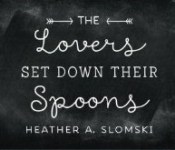
“The Lovers Set down Their Spoons”
They weave through the tables – their rain coats billowing out behind them like the kites you and I flew on that terrible day that began our love. Your kite kept wrapping around mine, and at first I thought it was sweet, but eventually mine nosedived into the sand.
In 2014, the Iowa Short Fiction Award was given to Heather A Slomski for The Lovers Who Set Down Their Spoons, a collection of 15 short stories that are thought-provoking, captivating, and haunting. Themes of love, loss and regret are heavily emphasized with symbolism and metaphors used to convey the message in the narratives that vary in length from 2-29 pages. Read more
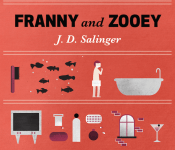
“Franny and Zooey”
An artist’s only concern is to shoot for some kind of perfection, and on his own terms, not anyone else’s.
Franny and Zooey is actually two short stories that were originally published in The New Yorker magazine: Franny, in the January 25, 1955 issue, and Zooey, in the May 4, 1957 issue. Written by J.D. Salinger, Franny and Zooey was published as a 2-chapter book in 1961 and is both a perplexing yet satisfying read that explores the meaning of life in its spiritual context. Read more


 Paddock Post