

“Appointment in Samarra”
The road was his. He wanted to drive on the left side and zigzag like an army transport and idle along at four miles an hour. But one time when he thought the road was his he had done all these things, finally to be arrested for drunken driving by a highway patrolman who had been following him all the while. “You’d think you owned the road,” the patrolman had said; and Julian could not answer that was exactly what he had been thinking. Read more
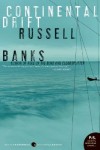
“Continental Drift”
It’s as if the creatures residing on this planet in these years, the human creatures, millions of them traveling singly and in families, in clans and tribes, traveling sometimes as entire nations, were a subsystem inside the larger system of currents and tides, of winds and weather, of drifting continents and shifting, uplifting, grinding, cracking land masses.
Through the years, much has been said about Continental Drift and probably equally as much about the book’s author, Russell Banks. Born into a blue-collar family, Banks led a tumultuous young life stealing a car and running away from home at 16 only to return and enroll in college before dropping out – leading him to hitchhike to Florida, where he got married, became a father and was divorced by the time he was 20. And, that’s just the beginning. Read more 
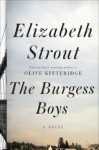
“The Burgess Boys”
You have family. You have a wife who hates you. Kids who are furious with you. A brother and sister who make you insane. And, a nephew who used to be kind of a drip but apparently is not so much of a drip now. That’s called family. Read more

“My Father’s Tears”
He was taller than I, though I was not short, and I realized, his hand warm in mine while he tried to smile, that he had a different perspective than I. I was going somewhere, and he was seeing me go. I was growing in my own sense of myself, and to him I was getting smaller. He had loved me, it came to me as never before. It was something that had not needed to be said before, and now his tears were saying it. Read more
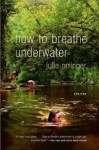
“How to Breathe Underwater”
….before I have a chance to really feel like her daughter again, we’re already saying goodbye.
How to Breathe Underwater is a collection of nine short stories written by Julie Orringer. Published in 2003, the book was dedicated in memory to the author’s mother, Agnes Tibor Orringer who died at the age of 46 in 1994 of cancer. Born in Hungary, Agnes Tibor was educated in the United States and grew up to be a doctor, wife, and mother. The author – 21 at the time of her mother’s death – was deeply impacted by her mother’s illness and although the stories are classified as fiction, the reader can’t help but think the author writes from experience.
Read more
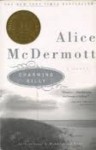
“Charming Billy”
Those of us who claim exclusivity in love do so with a liar’s courage: there are a hundred opportunities, thousands over the years, for a sense of falsehood to seep in, for all that we imagine as inevitable to become arbitrary, for our history together to reveal itself as only a matter of chance and happenstance, nothing irrepeatable, or irreplaceable, the circumstantial mingling of just one of the so many million with just one more. Read more

“Strangers”
His dairy once full , was now empty. He had been to all the weddings, heard about all the children, attended several funerals, and now, it seemed, was the only survivor.
In Strangers by Anita Brookner, 73-year old Paul Sturgis lives in a one bedroom apartment in South Kensington, the only place he has lived since he moved out of his parent’s large country home decades ago. A lonely child, Paul observed his parents unhappy marriage and hoped to have a different life; one in which he could pursue his love of art with a caring wife who would share his desire for an examined life, children, and close friendships. Read more
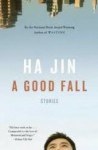
“A Good Fall”
Nearly 10 years ago, I read the book Waiting by Ha Jin which won the National Book Award and the PEN/Faulkner Award in 1999. Based on a true story that took place in China, Waiting is the tragic account of a man who enters an arranged marriage out of a sense of duty, not love. He later falls in love with another woman but is restricted from divorcing his wife without spousal consent so he is left to wait for his true love. Ten years after finishing the book and I can still recall feeling the seemingly endless wait for something desired that the author, Ha Jin so strongly conveys in his award-winning novel. In 2009, Ha Jin published A Good Fall – a collection of 12 short stories that center around a different aspect of the Chinese culture – the Chinese immigrant experience in the United States. Read more
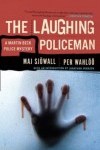
“The Laughing Policeman”
Mass murders seem to be an American specialty. And the compendium gives some plausible theories as to why it is so…the glorification of violence..the career-centered society. The sale of firearms by mail order …
The Laughing Policeman was written by Maj Sjowall and her husband Per Wahloo in 1970 although the book could have very well been written in the 21st century and still be relevant. The setting is Sweden, a small Scandinavian country in northern Europe that borders Finland and Norway. With a population of about 10 million, Sweden is widely considered to be a safe country (there were only 18 homicides (0.19 per 100,000 population) by firearms in 2010 while the United States recorded 11,078 firearm homicides (3.6 per 100,000 population)) the same year. So when a “person with a Suomi sub-machine gun model 37 fires 68 rounds of ammunition into nine people on a public transportation bus on a cold November night in 1967 on a deserted street in downtown Stockholm, the people of the country are shocked. Mass murders are not supposed to happen in Sweden. Read more
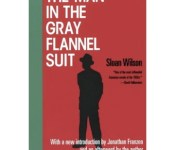
“The Man in the Grey Flannel Suit”
There were really four completely unrelated worlds in which he lived,…there was the crazy, ghost-ridden world of his grandmother and his dead parents. There was the isolated, best-not-remembered world in which he had been a paratrooper. There was the matter-of-fact, opaque-glass-brick partitioned world of places like the United Broadcasting Company and the Schanenhauser Foundation. And there was the entirely separate world populated by Betsy and Janey and Barbara and Pete, the only one of the four worlds worth a damn.
Tom Rath is an unhappy 33-year old married man, father of three trying to figure out what to do with his life. Raised in his grandmother’s once grand estate in Connecticut after his father’s untimely death and having returned from the war a changed man, Tom finds it difficult to live in the present because by his own admission, he is either brooding about the past or worrying about the future. Read more


 Paddock Post