

When People Become Pawns
Losses must be answered, grief redressed. ~ Julie Orringer (from Neighbors, a short story published in The Paris Review, Issue 221, Summer, 2017)
Injustices occur in countries across the world every single day and while these events often shock or sadden us, there are incidents that truly outrage us. The treatment of Otto Warmbier, the 22-year old University of Virginia college student, at the hands of the North Korean regime has touched many an American and there have been more than a few who have demanded revenge. Read more 
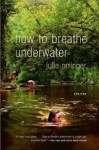
“How to Breathe Underwater”
….before I have a chance to really feel like her daughter again, we’re already saying goodbye.
How to Breathe Underwater is a collection of nine short stories written by Julie Orringer. Published in 2003, the book was dedicated in memory to the author’s mother, Agnes Tibor Orringer who died at the age of 46 in 1994 of cancer. Born in Hungary, Agnes Tibor was educated in the United States and grew up to be a doctor, wife, and mother. The author – 21 at the time of her mother’s death – was deeply impacted by her mother’s illness and although the stories are classified as fiction, the reader can’t help but think the author writes from experience.
Read more
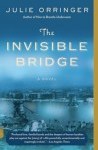
“The Invisible Bridge”
At a recent author forum in West Hartford, Connecticut, Julie Orringer spoke about how she came to write “The Invisible Bridge.” An American by birth, Orringer’s roots are in Hungary and the novel is loosely based on her grandfather and his brothers’ lives in the years leading up to and during World War II, before the family immigrated to the United States. As an adult, Orringer realized the stories she heard as a child needed to be told because people – and in particular her family – were deeply affected by the seismic events that took place in Europe in the late 1930’s and early 1940’s. That her ancestors were Jews in a country that was aligned with Germany at the time adds to the sense of horror. Using personal accounts from her family, historical research and a talent for story telling, Orringer wrote the novel “The Invisible Bridge:” a fictional story of a Hungarian family whose lives were shattered because they were Jewish. Read more


 Paddock Post