

Beefing Up Sustainability
A few years ago I stopped trying to deter people from eating animal products because its an impossible task. Most people defer to their doctors (most of whom eat animal products) but they should also read the medical studies (who paid for it, how it was done, and what the conclusions were) because these studies provide valuable information (both good and bad).
No one (including me) wants someone giving them bad news about their bad habits. And, yet I still feel compelled to write from time to time about the realities of eating animals and dairy products because the impact on our health and our planet is significant.
Food is emotional and and one of the few things we derive joy from every day. It’s hard to break habits but if hamburgers, hot dogs, fried chicken, bacon, cold cuts, eggs, and dairy products, and eggs are a regular part of your diet, consider the following: Read more 

Executive Compensation at the National Association of Manufacturers
The National Association of Manufacturers (NAM) is a tax-exempt, non-profit advocacy group (trade association) representing more than 14,000 manufacturing companies. Based in Washington, DC, NAM is primarily engaged in lobbying for policies in all areas that affect labor and employment in manufacturing.
The governing body has 204 voting members (board members), 203 of whom are independent. 171 of the 204 (84%) board members are male while 32 of the 204 (16%) are female. Read more

How the National Association of Manufacturers Spends Revenue
The National Association of Manufacturers (NAM) is a tax-exempt, non-profit advocacy group (trade association) representing more than 14,000 manufacturing companies. Based in Washington, DC, NAM is primarily engaged in lobbying for policies in all areas that affect labor and employment in manufacturing.
The governing body has 204 voting members (board members), 203 of whom are independent. 171 of the 204 (84%) board members are male while 32 of the 204 (16%) are female. Read more

Executive Compensation at the American Jewish Joint Distribution Committee
The American Jewish Joint Distribution Committee (also known as “The Joint” or the JDC) is a tax-exempt, non-profit 501 (c) (3) with about 150 employees in New York City, NY. The governing board – 169 independent board members although 173 board members are listed on the Form 990 (the difference appears to be due to timing issues – is comprised of 92 males and 81 females.
As one of the leading humanitarian organizations that works in 70 countries, the JDC works to rescue and provide aid to Jews in the advancement of Jewish life across the globe, primarily through awarding grants: in 2019, 65% of revenue was used for grants. Read more
Where Does $100 to the American Jewish Joint Distribution Committee Go?
The American Jewish Joint Distribution Committee (also known as “The Joint” or the JDC) is a tax-exempt, non-profit 501 (c) (3) with about 150 employees in New York City, NY. The governing board – 169 independent board members although 173 board members are listed on the Form 990 (the difference appears to be due to timing issues – is comprised of 92 males and 81 females.
As one of the leading humanitarian organizations that works in 70 countries, the JDC works to rescue and provide aid to Jews in the advancement of Jewish life across the globe, primarily through awarding grants: in 2019, 65% of revenue was used for grants. Read more
Executive Compensation at the Jewish Communal Fund
The Jewish Communal Fund is a tax-exempt, non-profit 501 (c) (3) that focuses on donor-advised funds, which are funds (more than 4,200) that have been established at the Jewish Communal Fund for philanthropic purposes.
The Jewish Communal Fund manages the funds and assists the clients that established the funds on how to give back to the community. This type of fund basically eliminates the client from having to do the research, management, and monitoring of funds, leaving the responsibility to the Jewish Communal Fund staff.
Based in New York, NY, the Jewish Communal Fund manages about $2 billion. In 2020, total revenue was $585 million (including $194 million in marketable securities), most of which came from contributions, gifts, and grants ($525 million), and investment income/gain on the sale of assets ($60 million). Read more

How Revenue is Spent at the Jewish Communal Fund
The Jewish Communal Fund is a tax-exempt, non-profit 501 (c) (3) that focuses on donor-advised funds, which are funds (more than 4,200) that have been established at the Jewish Communal Fund for philanthropic purposes.
The Jewish Communal Fund manages the funds and assists the clients who established the funds on how to give back to the community. This type of fund basically eliminates the client from having to do the research, management, and monitoring of funds, leaving the responsibility to the Jewish Communal Fund staff.
Based in New York, NY, the Jewish Communal Fund manages about $2 billion. In 2020, total revenue was $585 million (including $194 million in marketable securities), most of which came from contributions, gifts, and grants ($525 million), and investment income/gain on the sale of assets ($60 million). Read more
Radon and Lung Cancer
Cancer is the second leading cause of death (after heart disease) in the US claiming approximately 600,000 lives annually. Nearly 150,000 of those deaths are from lung cancer, which according to the American Cancer Society is more than breast, colon, and prostate cancer deaths combined.
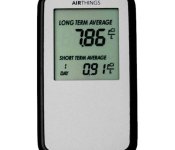
Most people know that smoking causes lung cancer so when someone is diagnosed with lung cancer, they are shocked when a patient was a non-smoker. What many people don’t know is that the second leading cause of lung cancer is radon: a colorless, odorless, tasteless, and invisible gas that naturally occurs in the atmosphere (radon comes from the natural decay of the radioactive chemical elements uranium or thorium that are found in nearly all soils, according to the NIH). Read more
Executive Compensation at St Jude (2020)
When people think of St. Jude’s, they often associate the organization with the children’s research hospital but St Jude’s is actually two organizations:
- St. Jude Children’s Research Hospital (St Jude): the children’s hospital that provides research and medical care; and
- American Lebanese Syrian Associated Charities (ALSAC): the fundraising arm; an organization that exists to raise funds for St. Jude’s
Although most non-profits do not separate fundraising from services, St. Jude’s does, so both organizations need to be analyzed because St. Jude’s relies on ALSAC for the majority of it’s revenue and has a beneficial interest in the organization. Read more

Where Does $100 to St Jude’s Go (2020)?
St. Jude’s is one of the most popular non-profit organizations in the country because the charity’s mission appeals to donors: they treat and help children with cancer and other life threatening illnesses. But, before making donations, donors should understand where revenue is spent and that St. Jude’s is actually two organizations:
- St. Jude Children’s Research Hospital, Inc. (St. Jude)
- American Lebanese Syrian Associated Charities (ALSAC)
ALSAC “exists for the sole purpose of raising funds and building awareness to support the current and future needs of St. Jude Children’s Research Hospital, Inc” while St. Jude engages in research and provides care and services to sick children and their families.
St. Jude has a beneficial interest in the assets of ALSAC but the organizations are separate non-profit 501 (c)(3) entities with specific functions: ALSAC raises funds while St. Jude does the research and provides the treatment.
So, where does a $100 donation go? The quick answer is that half goes to the hospital, 30% to organization expenses, and 20% goes into savings. For more detail, read on.


 Paddock Post