

“Music Through the Floor”
Music Through the Floor is a collection of ten fictional short stories written by Eric Puchner, a writer and professor of literature at Claremont McKenna College in California. Published in 2005, Music Through the Floor was a finalist for the New York Public Library’s Young Lions Fiction Award and The California Book Award – a tremendous accomplishment for an author’s first publication of short stories. Read more 

“The Box”
Günter Grass, the German writer awarded the Nobel Prize in Literature in 1999 for his collective body of work is best known for his literary masterpiece The Tin Drum which was published in 1959. The book was adapted into a film in 1979 and won the Academy Award for Best Foreign Language Film. Nearly 50 years later in 2006 as Grass was approaching his 80th birthday, he published Peeling the Onion – an autobiographical novel that begins at the end of his childhood when World War II broke out and concludes in 1959 with the publication of his first and most famous novel. In 2008, Grass published The Box, a novel considered to be a continuation of where Peeling the Onion ended although the author claims the story is a work of autobiographical fiction. Read more
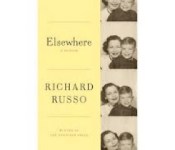
“Elsewhere”
Reading was not a duty but a reward, and from that I intuited a vital truth: most people are trapped in a solitary existence, a life circumscribed by want and failures of imagination, limitations from which readers are exempt. You can’t make a writer without first making a reader, and that’s what my mother made me.
Those are the written words of Richard Russo, the Pulitzer prize-winning author of Empire Falls and most recently Elsewhere – a memoir of his life as the son of Jean Russo – a woman he credits with directing his life into a field where being “obsessive, dogged, and rigid” are assets rather than liabilities. Read more
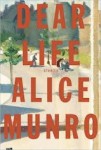
“Dear Life”
Alice Munro recently published a new collection of short stories entitled Dear Life. A brilliant anthology of 14 short stories with mostly single word titles that signify a key event, description or a character in a story, Dear Life is really two books in one: ten fictional short stories told from the perspective of characters striving to make sense of people in their lives, random events, and the decisions made; and four stories collectively called Finale that Munro says”form a separate unit, one that is autobiographical in feeling, thought not, sometimes, entirely so in fact. I believe they are the first and last – and the closest – things I have to say about my own life.” Read more
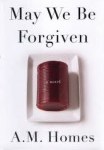
“May We Be Forgiven”
There are paths, forks in the road, journeys we must take. Sometimes it’s not a choice, but about what we do with what we are given.
May We Be Forgiven was written by Amy M. Homes, an American writer who teaches creative writing at Princeton University and who goes by the pen name: A.M. Homes. Published in September, 2012, May We Be Forgiven is a fast paced novel that starts with a bang (literally) and gives new meaning to “The Big Bang Theory” of how a family is formed. Although many people think a family is created by a marriage or the birth of a child, a family is formed by people uniting or expanding in many different ways, both conventional and non-conventional. And, when a family implodes, what are the survivors to do? Run and escape or come together? This is the dilemma faced by the major characters in May We Be Forgiven. Read more
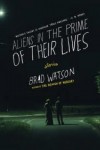
“Aliens In The Prime Of Their Lives”
When I first picked up “Aliens in the Prime of Their Lives,” I thought I was holding a book for young adults when in fact, the 12 short stories are about young people – an under-appreciated mother, a rebellious teen, an angry lover who has been abandoned, a divorced father, a sexually abused teen, a mother who looses a child, and a young boy’s family vacation. There are also the experiences of a father and son at “Bodies: The Exhibition” which showcases preserved human bodies dissected to display bodily functions, a young couple’s adventures in a car, the hunters that become the hunted, and a couple’s last moments on a doomed aircraft. This 263-page book reminded me of the “The Twilight Zone” – the American television series from the early 1960’s that depicted weekly singular episodes of disturbing, paranormal, or futuristic phenomena in seemingly normal day-to-day life. Read more
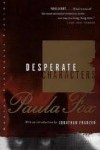
“Desperate Characters”
“Desperate Characters” was written by Paul Fox more than 40 years ago (1970) and yet, the story seems timeless. Sophie and Otto Brentwood are in their 40’s and have been married 15 years. Childless (and not really unhappy about it), well-educated, and established (he’s a lawyer, she’s a translator of books), they have a brownstone in Brooklyn with a modern stainless steel equipped kitchen, cedar planked floors, and rooms that seamlessly flow into each other (the result of removing the sliding doors). There is a Mercedes parked outside in a coveted street parking space that Otto reluctantly uses only when leaving town for fear of losing his space. And, there is the weekend home in the village of Flynders on Long Island which is neither on the water nor part of the Hamptons social scene. Inhabiting a world both in Brooklyn and Flynders in which they have nothing in common with the locals or the neighbors, Sophie and Otto are the ultimate gentrifiers basking in the idea of living in a changing area but horrified by the people and activity outside their windows. Read more

“White Noise”
Don Delillo is an American novelist who was born in 1936 and started writing novels in the 1960’s. His eighth book, “White Noise” won the National Book Award for Fiction in 1985. Set in a midwestern college town called Blacksmith on the campus of “College on the Hill,” “White Noise” is told from the perspective of Jack Gladney, a 51-year old professor who chairs the Hitler Studies Department at the local college. Gladney is married to Babette (his 5th wife) and together they have six children: his three – Mary Alice (19), Heinrich (14), and Steffie (9) and her three: Denise (11), Eugene (8) and Wilder (3). It may seem like the Brady Bunch but the Gladney family is more like George Banks (Steve Martin from “Father of the Bride”) meets “Mother’s Little Helper” on the set of “Home Alone.” Read more
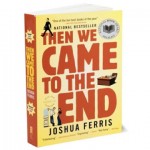
“Then We Came To The End”
There are many books about families and the dysfunction inherent in the groups we were born into but not many books are written about the workplace where people choose to spend at least a third of their day (with the other third devoted to family and friends and the remaining third supposedly sleeping). Workplaces become a microcosm of a family – a big family – and are full of dysfunctional and odd characters who can be hilarious, annoying, intimidating but also endearing. Enter the employees of a well-known Chicago advertising agency in the fictional novel “Then We Came To The End” by Joshua Ferris. Read more
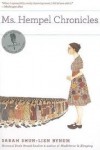
“Ms. Hempel Chronicles”
“Ms. Hempel Chronicles,” a finalist for the Pen Vaulkner Award for Fiction in 2009 was written by Sarah Shun-Lien Bynum, a writer who graduated from Brown University and the University of Iowa Writer’s Workshop and now teaches writing and literature at Otis College of Art and Design in Los Angeles, California. Read more


 Paddock Post