

The Ultimate Peanut Butter Cup
Man cannot live by bread alone. He must have chocolate and peanut butter.
Nearly one hundred years ago, a former dairy farmer and shipping foreman for Hershey named H.B. Reese invented the Peanut Butter Cup. Decades passed and until recently there hasn’t been much innovation in the peanut butter cup industry. Chocolate maker extraordinaire – Theo Chocolate – and master peanut butter maker, CB’s Nuts – have joined forces to make one very extraordinary Peanut Butter Cup: ground fresh peanuts covered in creamy milk or rich dark chocolate. Read more 
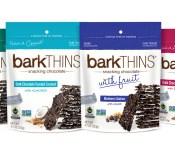
barkTHINS
Who doesn’t love chocolate bark – thick slabs of chocolate blended with nearly anything edible – fruit, nuts, candy, and more? The combination of flavors – sweet and salty – and textures – creamy, crunchy, and chewy make chocolate bark irresistible. By it’s very nature, chocolate bark is chunky making the confection a bit tricky to eat unless the choice is barkTHINS – perfectly portioned, thin slivers of fair-trade certified chocolate crammed full of wholesome non-GMO project verified snack ingredients like almonds, pumpkin seeds, pretzels, blueberries, quinoa, coconut, and peppermint. Read more

Maya Kaimal Chickpea Chips
Chickpeas – also known as garbanzo beans – are loaded with protein and fiber. Easily made into a flour, chickpeas can be used to make a variety of products including chips that are crispy and savory. Maya Kaimal Fine Indian Foods combines flour made from chickpeas with rice flour, sunflower and canola oil, dehydrated potatoes, rice starch, sesame seeds and spices to make a flavorful and delicious chip. Similar to murukku – savory and crunchy twists made from rice and bean flour in India – Maya Kaimal Chickpea Chips are a great alternative to traditional chips. Read more

ChocAlive Truffles
There are four basic food groups: milk chocolate, dark chocolate, white chocolate, and chocolate truffles. A Chocolate Enthusiast
The chocolate truffle: rich, decadent, creamy, and fresh. Leave it to the French to invent a confectionary that contains obscene amounts of cream and chocolate but credit a few Americans at ChocAlive for making an exquisite vegan, dairy-free raw chocolate truffle that is as gratifying to your taste buds as it is satisfying to your body. ChocAlive truffles contain only the highest quality plant-based raw and organic ingredients including Medjool dates, cacao, coconut, agave nectar, and almonds. Read more

Hamantashen
A Hamantashen is a three-cornered pastry pocket stuffed with a sweet filling. Soft and chewy, Hamantashen is similar to a cookie and typically eaten during Purim – a holiday in which the Jews celebrate being saved from persecution in ancient Persia. Purim is usually celebrated in March (as determined by the Hebrew calendar) but through the years, Hamantashen has become very popular so the cookie is often served year-round and consumed by both Jews and non-Jews alike. Read more
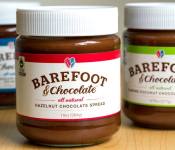
Move Over Nutella, Make Room for Barefoot and Chocolate!
Fifty years ago, an Italian company (Ferrero) introduced Nutella, the brand name of a hazelnut chocolate spread whose two main ingredients are sugar and palm oil. For decades, there were few choices in the chocolate nut butter market until Barefoot and Chocolate came along in 2013 and created a Hazelnut Chocolate Spread that still relies on sugar (albeit, organic and fair-trade certified) but uses a heavier hand when it comes to hazelnuts and cocoa, the two main flavor ingredients that give Barefoot and Chocolate’s Hazelnut Chocolate Spread its rich, satisfying taste. Read more

Veggie-Go’s
Most fruit leathers are made from fruit puree concentrate (usually apple) combined with juice concentrate but not Veggie-Go’s by Naked Edge Snacks of Boulder, Colorado. Made with whole organic fruits and vegetables, spices, and organic flax seeds, Veggie-Go’s are delicious snack leathers with no added sugar and only 2-4 grams of naturally occurring sugar in each serving (most fruit leathers have 8-12 grams of sugar per serving). Gluten-free, non-GMO verified, kosher, vegetarian, and vegan, Veggie-Go’s are a delicious snack for both kids and adults. Read more

Flax Granola by CCB and G
Flax Granola by Columbia County Bread and Granola (CCB and G) wins the prize for the most unique and forward thinking granola on the market by making a line of granola without added oils and challenging the traditional recipe for granola that calls for oats as a base. Instead, the company relies on flax seeds, baking them slowly at a low temperature to preserve the integrity of flax’s rich omega 3 fatty acids and to provide the crunchy texture granola fans have come to expect. But that’s not all. The company uses spices including nutmeg, cinnamon, and cloves to give the granola a slightly sweet yet savory flavor.

Sukhi’s Potato Samosa
Samosas – flaky pastries with savory fillings – are a popular finger food in the Middle East and Asia, especially India and Pakistan where the fillings are often made of potatoes, onions, peas, lentils, and sometimes poultry or meat. In the United States, samosas are widely available at Indian restaurants, supermarkets, and most recently, at grocery stores in the frozen food section under the name of Sukhi’s Gourmet Indian Foods: Indian Bites. Read more

The Vermont Common Cracker
When it comes to flavor, common does not mean ordinary.
Nearly two hundred years ago in 1828, the Cross brothers of Montpelier, Vermont created the Montpelier Cracker which became known as the Vermont Common Cracker: a mild flavored, crunchy cracker often served with cheese, dips, and spreads but equally delicious with nut butters, jam, or served with soups and chowders. Although the recipe has been slightly modified to eliminate unhealthy oils and fats, the Vermont Common Cracker is essentially the same cracker first enjoyed by Vermonters and now savored by many. Read more


 Paddock Post